
Managed IT Services, IT Support & MSP for Dallas
GXA® is the Dallas IT consulting firm mid-market companies choose when they’ve outgrown their current provider. 21 years serving Dallas, SOC 2 attested, ISO 9001 certified, and a 15-minute average response time.
- Dedicated vCIO, vITM, and vCISO on every engagement
- Monthly on-site visits — four days per month per client
- gShield MDR + 24/7 SOC included in every plan
Get Your Free Dallas IT Consultation
30 minutes with a senior consultant. Response within one business day.
Credentials, certifications & recognition
Managed IT Services in Dallas
GXA provides managed IT services to Dallas businesses — a complete outsourced IT department covering strategic leadership (vCIO), daily operations (vITM), security leadership (vCISO), 24/7 helpdesk support, cybersecurity, cloud, backup, and vendor management for a predictable monthly fee. Headquartered in Richardson, TX since 2004. 15-minute average response time. SOC 2 Type II attested. ISO 9001:2015 certified.
Managed IT services in Dallas is an outsourced model where a provider becomes responsible for your technology stack — strategically and operationally — for a predictable monthly fee. Unlike break-fix IT, where you call only when something is on fire, a managed IT relationship is built around five recurring functions:
- Strategic leadership. A vCIO builds your 12-month roadmap, aligns technology to business goals, and runs quarterly business reviews.
- Daily operations. A named vITM owns standards, vendor coordination, and IT health — visiting your office monthly.
- Security leadership. A vCISO leads risk reviews, the security program, and compliance work.
- Reactive support. A 24/7 helpdesk handles tickets with a 15-minute average response.
- Proactive monitoring. A 24/7 NOC and SOC monitor your environment to catch issues before they impact the business.
For Dallas businesses with 20–500 employees, this model delivers an entire IT organization for less than the loaded cost of one mid-senior internal hire — and far less than the four or five hires it would actually take.
Dallas IT Services We Provide
Whether you need a full IT department or help in one area, GXA covers the core technology needs of Dallas businesses — support, strategy, and security under one accountable team.
IT Support in Dallas
24/7 helpdesk with a 15-minute average response, backed by a named Virtual IT Manager who knows your environment. Most issues resolve remotely; on-site help comes same-day from our nearby Richardson office.
Dallas IT Consulting Firm
Strategic technology leadership through a dedicated vCIO — 12-month roadmaps, IT budgeting, and vendor strategy aligned to your business goals. The difference between a provider that reacts and one that tells you what to do next.
Cybersecurity for Dallas Businesses
gShield delivers 24/7 managed detection and response, a security operations center, email and phishing protection, and vCISO leadership. SOC 2 Type II attested, ISO 9001:2015 certified, with HIPAA, PCI-DSS, and CMMC support.
Outsourced IT for Dallas Companies
Looking for an IT company in Dallas to run technology end-to-end — or to augment the team you already have? GXA's Virtual IT Department replaces or supports your internal IT with one accountable partner.
Trusted by Dallas-area organizations
21 years serving Texas businesses







Read client-approved stories on our case studies page.
Typical Dallas MSP vs. GXA Virtual IT Department
Most Dallas MSPs sell a ticket queue. GXA delivers a named IT organization that knows your business and shows up in person every month.
Typical Dallas MSP
- Reactive, ticket-based support
- No dedicated strategist or CIO-level guidance
- Different technician every call
- Security is a separate, upsold add-on
- Break-fix mentality: fix one thing, break another
- Rarely (or never) on-site
- Vendors finger-point; no one owns the problem
GXA Virtual IT Department
With GXA- Proactive NOC monitoring prevents issues
- Dedicated vCIO, vITM, and vCISO per client
- Named team that knows your business
- gShield MDR + SOC included in every plan
- Strategic 12-month roadmaps and QBRs
- vITM on-site 4 days/month per client
- One throat to choke, single accountability
What Dallas Leaders Say
Dallas-area organizations that have partnered with GXA.
“GXA had the technical support expertise and capacity to help improve Briggs Freeman’s IT infrastructure in a timely manner. GXA’s consultants speak the language of both business and IT and had the business acumen necessary to link our company’s strategies to IT strategies.”
“GXA’s quick response, depth of knowledge, and dedication (working around the clock for several days) proved to us that GXA was a company we wanted to partner with long-term for our high-end infrastructure, network, server and telecommunications needs.”
“GXA’s solutions for our company immediately created the kind of results that would support production and business expansion. We are delighted to find an IT provider whose efforts support all parts of our business so effectively.”
“Enormous amount of peace of mind… we don’t have to worry about the technology side.”
“They push themselves to continue to live above expectations and keep their clients and their members happy.”
See How GXA Works for Dallas Businesses
A 90-second look at the Virtual IT Department model and the team behind it.
Video coming soon
See our written case studies while we finish production.
Dallas Neighborhoods We Serve
From Downtown towers to the Telecom Corridor — each Dallas business district has its own IT character. Here is how we serve them.
Downtown Dallas
20–25 min from Richardson HQThe central business district concentrates Dallas’ largest corporate headquarters across Bank of America Plaza, Comerica Bank Tower, Renaissance Tower, and the Arts District. Tower tenants face a specific IT mix: shared building risers, ISP redundancy challenges, after-hours access for on-site work, and elevator-based hardware delivery. GXA coordinates with property management teams on cabling, conduit, and dedicated circuits so deployments stay on schedule.
Uptown
20 min from Richardson HQUptown’s mix of law firms, financial services, and creative agencies sits between McKinney Avenue and the Katy Trail. Office density is high and street parking is scarce, so we plan after-hours and weekend cutovers around tenant access. Many Uptown firms run Microsoft 365 plus a vertical SaaS stack and need help-desk coverage that respects partners’ calendars.
Park Cities (Highland Park / University Park)
15 min from Richardson HQHighland Park and University Park host private family offices, wealth managers, and specialty professional services firms. Security and discretion drive the engagement model here — SOC 2 attested vendors, named contacts, NDAs, and tight change control. GXA’s vCISO leads risk reviews and the vITM handles on-site work without disrupting the partner schedule.
Preston Hollow
15 min from Richardson HQPreston Hollow’s North Dallas business corridor along Preston Road and Northwest Highway hosts medical practices, real-estate firms, and family-owned businesses. The neighborhood’s healthcare clients drive our HIPAA-ready stack: encrypted endpoints, BAA-eligible cloud services, audited backups, and documented incident-response runbooks.
Design District
20–25 min from Richardson HQDesign District agencies, showrooms, and creative studios run heavy on Adobe Creative Cloud, Figma, and asset-heavy workflows. Storage performance, file collaboration, and bandwidth matter more than typical SMB profiles. GXA designs the network, storage, and Microsoft 365 / Google Workspace setup around that creative production load.
Deep Ellum
20–25 min from Richardson HQDeep Ellum has shifted from music-venue district to a dense cluster of tech startups, software firms, and venture-backed companies. The IT priorities here — fast onboarding, single sign-on, MDM for BYOD, and security maturity that satisfies investors — align closely with GXA’s Virtual IT Department model. SOC 2 readiness is often the first ask.
Victory Park / American Airlines Center
25 min from Richardson HQVictory Park is home to sports, entertainment, and corporate offices around the American Airlines Center. We support organizations with mixed staff and contractor populations, event-driven access requirements, and integrations with venue networks. The pace is event-led, not calendar-led.
Oak Lawn
20 min from Richardson HQOak Lawn concentrates professional services and healthcare practices. The neighborhood’s smaller, partner-led firms typically want a senior point of contact (vCIO) rather than a ticket queue. Our monthly on-site vITM visits land well here — they replace the “I know my IT person” expectation that local firms started with.
Richardson Telecom Corridor
5 min from Richardson HQOur own home base. Richardson is the historic Telecom Corridor and now a tech, healthcare, and HQ corridor along US-75. Many of GXA’s longest-tenured Dallas-area clients are headquartered here. Being five minutes away means our team is on-site within an hour for anything truly urgent.
Visit our Richardson page →North Dallas / Far North Dallas
10–20 min from Richardson HQThe LBJ Freeway and Dallas North Tollway business corridors run through Far North Dallas into Plano and Frisco. Many mid-market companies here have growth-stage IT challenges: stitched-together stacks, missing strategy, mismatched standards across acquired offices. The vCIO 12-month roadmap is the highest-leverage entry point.
See our Plano page →Outside Dallas proper? We serve the entire DFW metroplex:
What Drives the Cost of Managed IT in Dallas
Every quote we write is per-user and customized. Here are the five factors that move the number up or down.
Number of users and endpoints
Per-user pricing scales linearly with the size of your team. Endpoints (laptops, desktops, servers, mobile devices) factor into the security and patching workload.
Industry & compliance requirements
HIPAA, SOC 2, PCI-DSS, and CMMC each add control work — documented policies, evidence collection, audit support, and specific tooling. Compliance-driven engagements cost more, but the audit risk is bounded.
Security stack depth
gShield baseline (MDR, SOC, phishing simulation) is included. gShield vCISO Basic adds named security leadership and a GRC platform. gShield Compliance adds attestation prep for HIPAA / SOC 2 / PCI / CMMC.
Strategic leadership intensity
Every plan includes a vCIO and a vITM. Higher-touch engagements add more strategic hours: deeper roadmap work, M&A integration, custom QBR analytics, or executive coaching.
On-site cadence and geography
Our standard is monthly on-site visits per client — 4 days per month from your vITM. More frequent visits, multi-site environments, or after-hours work are quoted individually.
Dallas MSP Pricing Index 2026
Our methodology guide explaining how Dallas managed IT pricing actually breaks down. Free download.
Managed IT Services for Dallas Mid-Market
Pick a starting point. Every engagement includes a vCIO, vITM, vCISO, and 24/7 helpdesk.
Fully Managed IT Services Dallas
Complete IT department replacement with strategic vCIO leadership, 24/7 support, and proactive management.
Learn more →Co-Managed IT Dallas
Augment your internal IT team with escalation support, strategic guidance, and enterprise-grade tools.
Learn more →Cybersecurity & gShield
Executive security leadership with the gShield framework — vCISO, MDR, compliance, and 24/7 SOC monitoring.
Learn more →Virtual CIO (vCIO) Dallas
Strategic IT planning, 12-month roadmaps, budget alignment, and quarterly business reviews.
Learn more →Industries We Serve in Dallas
Each engagement is shaped by the controls, vendors, and risks specific to the industry.
Healthcare & Medical Practices
HIPAA BAA-ready stack, encrypted endpoints, audited backups
Professional Services
Confidentiality-grade security for law, accounting, and consulting firms
Manufacturing & Distribution
IT/OT segmentation and production-floor uptime
Financial Services
SEC and FINRA-aware controls, audit-ready evidence collection
Construction & Real Estate
Multi-site connectivity, field-team mobility, BMS / PropTech security
Nonprofits & Charter Schools
Donor-data protection, FERPA awareness, grant-conscious budgets
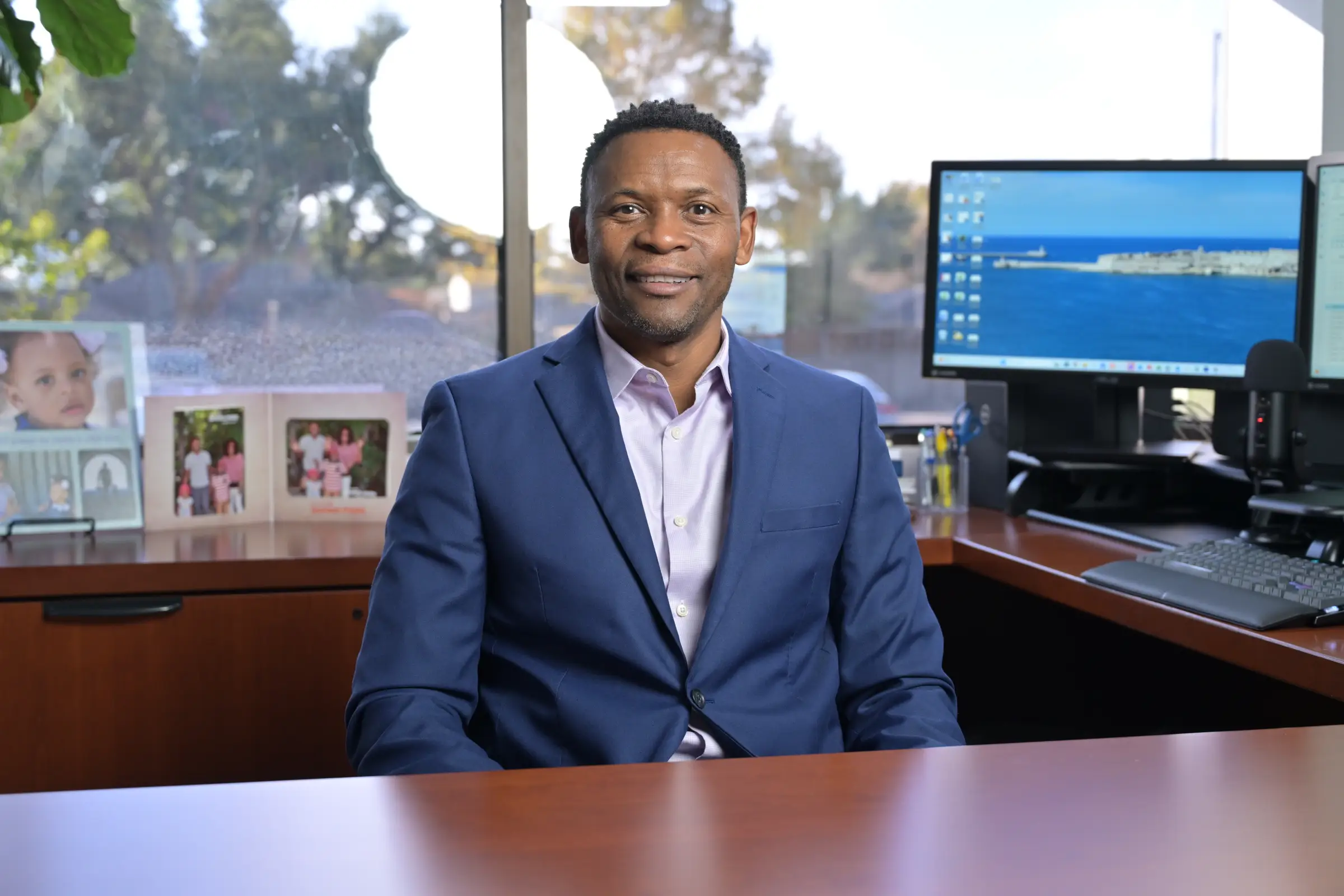
GXA stands for George and Alicia.
For 21 years, George and Alicia Makaye have built GXA around two things Dallas leaders rarely expect from an IT firm: real technical depth, and real commitment to the community. George is CISSP-certified and still answers the phone. Alicia, a Ph.D. and Air Force veteran, leads GXA Cares, the philanthropic side of the company.
GXA Cares has served hundreds of children through medical camps in Kenya and supports partners across the Dallas-Fort Worth area every year. It is also why, 21 years in, GXA still operates like a family business, even at mid-market scale.
See how GXA gives backGXA Headquarters
269 W. Renner Pkwy
Richardson, TX 75080
Located in the heart of the Telecom Corridor, just minutes from Downtown Dallas, Plano, Frisco, and the entire DFW metroplex.
Your Dallas Neighbor, Not a Call Center
GXA has been part of the Dallas business community since 2004. Our Richardson headquarters means a real local team — with named people who visit on-site every month.
We serve 14 Texas cities from one HQ, but Dallas is the heart of the operation. Your dedicated vITM visits monthly, your vCIO runs the strategy, and your vCISO leads security — all of them based in the metro.
Schedule an IT AssessmentFrequently Asked Questions
Common questions from Dallas business leaders evaluating managed IT providers.
What are managed IT services?
Managed IT services is an outsourced model where a provider like GXA handles all or part of your technology needs for a predictable monthly fee. This includes 24/7 helpdesk support, network and security monitoring, cybersecurity, cloud services, and strategic IT planning. Unlike break-fix IT, managed services are proactive: systems are monitored and maintained to prevent issues before they impact your business.
Does GXA provide IT support in Dallas?
Yes. GXA provides 24/7 IT support to Dallas businesses with a 15-minute average response time. Most issues are resolved remotely by our Richardson-based helpdesk, and your dedicated Virtual IT Manager visits on-site monthly. For urgent issues requiring a technician on-site, our Telecom Corridor headquarters enables same-day response across Dallas.
Is GXA a Dallas IT consulting firm?
Yes. GXA is an IT consulting firm serving the Dallas–Fort Worth metroplex for 21 years, not just a break-fix MSP. Every client gets strategic technology leadership through a dedicated vCIO who builds a 12-month roadmap, aligns IT to business goals, and runs quarterly business reviews — alongside day-to-day operations and 24/7 support.
Does GXA provide cybersecurity services in Dallas?
Yes. GXA delivers cybersecurity to Dallas businesses through gShield — 24/7 managed detection and response (MDR), a security operations center (SOC), email and phishing protection, and vCISO security leadership. GXA is SOC 2 Type II attested and ISO 9001:2015 certified, and supports HIPAA, PCI-DSS, and CMMC compliance programs.
What is the difference between an MSP and an IT consulting firm?
A traditional MSP (managed service provider) typically operates a ticket queue and reacts to issues. An IT consulting firm — the model GXA uses — provides strategic leadership (vCIO), operational management (vITM), and security leadership (vCISO) in addition to reactive support. The practical difference is whether your provider tells you what to do next, or only responds to what already broke.
How much do managed IT services cost in Dallas?
GXA uses per-user pricing that scales with your team. The exact rate depends on number of users, security and compliance requirements, and strategic leadership intensity. Most clients are mid-market companies with 20–500 employees and $5M–$100M in revenue. We publish a methodology guide — the Dallas MSP Pricing Index 2026 — that explains what drives pricing up or down. For a quote on your specific environment, call (972) 630-3323 or schedule a consultation.
What is GXA’s response time for Dallas IT support?
GXA averages a 15-minute response time for support requests. Our 24/7/365 helpdesk is staffed by experienced engineers who resolve most issues remotely. Our Richardson headquarters in the Telecom Corridor means rapid on-site response across Dallas — not a distant call center.
Does GXA provide on-site IT support in Dallas?
Yes. Every client gets a dedicated Virtual IT Manager (vITM) who visits on-site monthly — four days per month per client — for proactive maintenance, standards enforcement, and relationship building. For urgent issues requiring physical presence, our Richardson headquarters enables same-day on-site response throughout Dallas.
What is the Virtual IT Department model?
The Virtual IT Department gives you enterprise-level IT leadership without full-time executive hires. You get a vCIO for strategy and roadmaps, a vITM who visits monthly to manage day-to-day IT health, a vCISO for security leadership, and 24/7 helpdesk — essentially a complete IT organization for a fraction of the cost of building one in-house.
What is a vCIO and does my Dallas business need one?
A vCIO (virtual Chief Information Officer) provides executive-level IT strategy on a part-time basis. Dallas businesses benefit from a vCIO when they need technology roadmaps, budget planning, vendor management, and strategic guidance but cannot justify a full-time CIO salary of $200,000+. GXA includes a named vCIO in every Virtual IT Department engagement.
How does GXA compare to other Dallas MSPs?
Three differences come up most often. First, every GXA client has a named vCIO, vITM, and vCISO — a team that knows the business, not a rotating ticket queue. Second, we visit on-site four days per month per client; most MSPs never come on-site. Third, we are SOC 2 Type II attested and ISO 9001:2015 certified (annual JAS-ANZ audits since 2019), credentials many regional MSPs do not hold. Independent comparison directories like Clutch and Cloudtango list our profile under GXA.
Can GXA work with my existing IT team?
Yes. Our Co-Managed IT service is built for Dallas businesses with internal IT staff. Your team handles day-to-day user support while GXA provides strategic leadership (vCIO), operational standards (vITM), security operations, specialized expertise, and 24/7 backup support. We augment your team rather than replace them.
How long does onboarding take?
Most Dallas clients are fully onboarded in 60–90 days. Onboarding starts with a free IT consultation, then your vCIO builds a 90-day plan covering documentation, standards alignment, security baseline, vendor transitions, and the handoff from your current provider. You do not lose coverage during the transition — we run in parallel until the cutover is clean.
What does the first 90 days look like?
Days 1–30: discovery and documentation — your vITM inventories assets, captures current state, and identifies immediate risks. Days 31–60: standards rollout — patch baselines, security tooling, backup verification, and account hygiene. Days 61–90: your vCIO presents a 12-month strategic roadmap aligned to your business goals and budgets. The first QBR is scheduled at day 90.
What happens if I want to leave GXA?
You own your data, your documentation, and your accounts. We hand off cleanly with a documented exit plan: account-by-account ownership transfer, knowledge-base export, hardware and license inventory, and 30–60 days of transition support if you need it. The contract terms are clear and written; you are not locked in.
Do you sign a BAA for healthcare clients?
Yes. Where a Dallas healthcare client is subject to HIPAA and a Business Associate Agreement is required, GXA will execute one. Our stack supports HIPAA-required safeguards: encrypted endpoints, audited backups, access controls, BAA-eligible cloud services, and documented incident-response runbooks. The vCISO leads the compliance program; our gShield Compliance tier adds attestation prep.
What industries does GXA serve in Dallas?
Professional services firms (law, accounting, consulting), healthcare practices, manufacturing and distribution, financial services, construction and real estate, nonprofits and charter schools, AEC firms, and defense contractors. Our ideal clients have 20–500 employees and $5M–$100M in revenue.
What compliance frameworks can GXA help with?
HIPAA (healthcare), SOC 2 (service organizations), PCI-DSS (payment card), CMMC (defense contractors), and general security frameworks like NIST CSF and CIS Controls. Our gShield Compliance tier includes a GRC platform (Vanta), compliance assessments, evidence collection, and audit preparation support.
Does GXA offer cybersecurity services for Dallas businesses?
Yes. Our gShield framework includes 24/7 MDR (Managed Detection and Response) with SOC monitoring, vCISO security leadership, vulnerability management, phishing simulation and training, and compliance support for HIPAA, SOC 2, PCI-DSS, and CMMC. GXA is SOC 2 Type II attested, demonstrating our internal security maturity.
What size businesses do you support in Dallas?
We serve Dallas businesses with 20–500 employees, typically $5M–$100M in revenue. The common thread is that our clients have outgrown break-fix IT — they need strategic technology leadership, not just someone to call when things break.
What areas of Dallas does GXA serve?
GXA serves the entire Dallas-Fort Worth metroplex from our Richardson headquarters, including Downtown Dallas, Uptown, Oak Lawn, Park Cities, Preston Hollow, North Dallas, Far North Dallas, Lake Highlands, White Rock, East Dallas, Deep Ellum, Design District, Victory Park, and all surrounding business districts.
What certifications and credentials does GXA hold?
SOC 2 Type II attestation, ISO 9001:2015 certification (JAS-ANZ accredited, annual audits since 2019), Microsoft Modern Work SMB Solutions Partner, and 2024 MSP Titans finalist. Three-time Inc. 5000 Honoree (2014, 2019, 2020). Our CEO George Makaye is CISSP-certified.
How is GXA different from a national MSP?
National MSPs scale by standardizing the call center. The technician you reach this time is probably not the technician you reach next time. GXA is a Dallas IT consulting firm — same vCIO, same vITM, same vCISO month over month. Our Richardson headquarters means physical presence on-site for the businesses we serve. That continuity is the product.
What if I already have an MSP and I am thinking about switching?
About 80% of our best clients came to us after outgrowing their previous MSP. We run a no-cost 30-minute conversation to understand the gaps you are seeing, then a 60–90 day transition plan that runs in parallel with your current provider until the handoff is clean. You do not lose coverage during the switch.
How do I get a quote for managed IT services in Dallas?
Call (972) 630-3323 for sales, or schedule a consultation through the form on this page. Most quotes are returned within one business day. We will walk you through exactly what is included so there are no surprises on your invoice.
Ready to put a real IT organization behind your Dallas business?
30 minutes with a senior GXA consultant. Strategic, not sales. You will leave with an honest read on where your IT stands and a custom proposal showing how GXA can become your IT department — with vCIO leadership, 24/7 support, and gShield security built in from day one.
- Senior consultant, not a sales rep
- Customized proposal for your environment
- Response within one business day
Book my Dallas IT consultation
Tell us about your business; we will show you what GXA can do.